 |
|
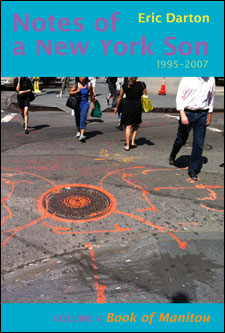
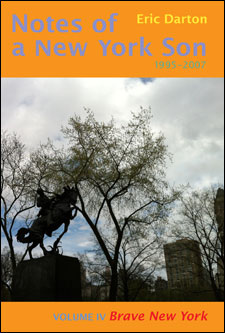
Eric Darton grew up in the Manhattan of the 1950s. As the century entered its final decade, he began to suspect his hometown’s celebrated “delirium” was sliding into full-blown madness.
As much to save his own sanity as to bear witness to the changes taking place around him, Darton began writing the journal that became Notes of a New York Son. The resulting five volumes chronicle a pivotal epoch in the life of the city.
Notes of a New York Son opens in the midst of the real estate-crazed nineties and ends on the eve of the financial meltdown. Throughout its nearly twelve-year timespan, Darton narrates scenes of everyday life and events of global magnitude in a style combining close observation, sharply-attuned criticism and trenchant humor.
Praise for Notes of a New York Son
“I would go anywhere with this narrator.”
— Elaine Markson
“Notes of a New York Son is Eric Darton’s journal of his personal and communal life, written with the keen sight of a writer, the humor and irony of a political observer, the complexity of a cultural historian and more.”
— Gioia Timpanelli, author of What Makes a Child Lucky
“Eric Darton is the walker in the city of his generation.”
— Thomas Mermall, author of Semillas de gracia
|
|
| |
 |
Newly Expanded
Divided We Stand:
A Biography of The
World Trade Center
August, 2011
304 pages, 5.75 x 9
11 photographs
Paperback, 978-0-465-02765-1
Price: $15 + shipping and handling
Purchase by sending a check for $18.50 to:
Eric Darton Books
315 8th Avenue, 20F, New York, NY 10001
or click the Pay Pal button below
If you want your order sent outside the U.S., please contact: ericdartonbooks@earthlink.net for shipping prices.
|
|
First published in 1999, Darton's classic original text is now supplemented with a new introduction and afterword by the author.
Praise for Divided We Stand
“Eric Darton’s Divided We Stand is a model not only of
writing but of citizenship. It fuses analytical brilliance with personal
feeling. Darton knows and shows where the bodies are buried, but he
never lets his anger poison his underlying love. He shows us how to
confront all that has been done to our town, and how to live through
it and lay claim to the city as our own.”
—Marshall Berman, author of All That Is Solid Melts Into Air
“A mesmerizing history of how deep-seated struggles over architectural
aspirations, economics, city planning and the exigencies of democracy undergird
the New York cityscape.”
—Publishers Weekly
“An engaging book, and often beautifully written, intercutting vignettes of local history with a chronicle of the political, ideological, and financial tides that once swept through the city, leaving the Trade Center in their wake.”
—The Wall Street Journal
“A fine social history of the towers.”
—Adam Gopnik The New Yorker
“A must for understanding New York both before and after the towers came down.”
—Roberta Brandes Gratz, award-winning journalist and author of The Battle for Gotham: New York in the Shadow of Robert Moses and Jane Jacobs
|
|
|
|
FICTION |
|
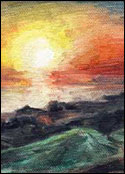
Orogene
A novel of Utopia as seen through a painter's eye.
“It doesn’t happen often—maybe once in a few decades—that a literary work changes the landscape, showing the world that there’s a new way to write, a new way to read and think. Faulkner’s The Sound and the Fury might be an example. Other possible candidates: Pynchon’s Crying of Lot 49, Nabokov’s Lolita.
Eric Darton’s novel Orogene is in this very select league: an amazing fusion of poetry, fun, nightmare, and meditation on the human condition.
It is reported that the Soviet editor Tvardovsky, when the manuscript of One Day in the Life of Ivan Denisovich, by an ex-convict named Solzhenitsyn, was placed in his hands and he began to read, stopped, got up, put on his finest clothes before returning to the novel. As I read Orogene, I thought often of Tvardovsky: the rare privilege of getting to turn the pages of a masterpiece before it enters the world in print.
What I told Darton was pretty much what Tvardovsky told Solzhenitsyn: ‘You have written a marvelous thing.’”
—Michael Kandel, editor (for Harcourt) of Ursula K. Le Guin and Jonathan Lethem and translator of Stanislaw Lem
|
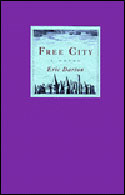 |
Free City, a novel
W.W. Norton, 1996
Click to hear an excerpt
“Darton’s seductive fable is a stylistic tour de force, a dazzling parable about the birth of the modern age with its terrors and promise....this debut novel is reminiscent of Italo Calvino’s work in its dashing mingling of history and fantasy.”
—Publishers Weekly
“Darton’s Free City warns of something so evident that it is difficult
to see: if the foundations of a ‘free city’ - a society - are undermined,
it can be lead to ruin. This tricky, delirious fable for our times
- fraught with profound and uncertain change, in which the alliance
between unimpeded technology and capitalism drags us blind into
the new millennium - carries a strong moral and political load.
But Darton’s narrative refuses pessimism, arguing that collective
freedom is capable of defending itself with the magic fluid of a
mind truly free and sovereign.”
—Roberto Saladrigas, La Vanguardia, Barcelona
|
|
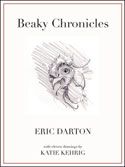
Beaky Chronicles
A time-traveling saga of friendship and manipulation told in a cycle of twelve animal fables. Featuring original illustrations by Katie Kehrig.
Click to hear an excerpt
|
|
Born Witness
Scroll of Wonders
Two free, downloadable, nonfiction narratives of the extraordinary times we are living through. |
|
ESSAYS, TALES & SOUNDS
|
 |
Essays, Tales & Sounds
• A selection of critical writings from the utopian to the ridiculous.
• Several short and novella-lengh fictions.
• A sampler of music and spoken words recordings made once upon a time in the innocent ’80s. |
ANTHOLOGIES
|
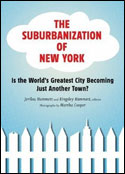 |
The Suburbanization of New York:
Is the World's Greatest City Becoming Just Another Town?
Edited by Jerilou Hammett and Kingsley Hammett, with photographs by Martha Cooper. Princeton Architectural Press, 2007
“Only two things are sure: New York is in rapid motion, and this book is a great guide to where it might be headed. Its diverse array of observations-written by some of the country’s smartest (and wittiest) analysts and activists-are incisive and accessible, provocative and entertaining, perfect for an urban studies course and for anyone interested in pondering the past and future of cities.” —Mike Wallace, Pulitzer Prize-winning co-author of Gotham: A History of New York City to 1898
|
| |
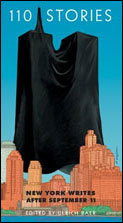 |
110 Stories: New York Writes After September 11
Edited by Ulrich Baer. New York University Press, 2002
“Drawing on the enormous resources of New York's literary community,
110 Stories: New York Writes After September 11 is a surprisingly
supple commemoration of disaster. Short-short stories and poems
by New York writers are the collection's raison d'être.... Overall,
this collection proves the transformative power of art.”
—Publishers Weekly |
| |
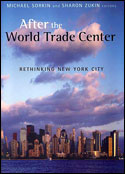 |
After the World Trade Center: Rethinking New York City
Edited by Michael Sorkin and Sharon Zukin. Routledge, 2002
“Amid the flood of glossy picture books memorializing September
11 comes a rare collection of essays on the fallen World Trade Towers.
Written by social critics and urbanists, the essays provide a multidimensional
portrait of the towers and New York in the aftermath of September
11. The Lower Manhattan site is presented as a complex, contested
landscape rich in historical, social, and political context.... Global
and local in outlook, reaching beyond the personal-tragedy, American-values
perspective that has dominated the media, this thoughtful volume
is not just for New Yorkers.”
—Philip Herbst, Booklist |
home • books & publications • essays, tales & sounds • web appearances & links • bio • wtc: a living archive • contact |
|
| |
|